Stucco Repair & Painting: Protect Your Home
Take a drive through any neighborhood in Florida, and you will notice one thing immediately: almost every home is built with a stucco exterior. Stucco is durable, fire-resistant, and provides that classic, beautiful coastal look.
However, stucco has one major weakness: it is extremely rigid. As your house naturally settles into the Florida soil and the exterior walls expand and contract under the blistering summer sun, that rigid stucco is going to crack.
While a tiny, hairline crack next to a window frame might look like a minor cosmetic flaw, ignoring it is one of the most expensive mistakes a homeowner can make. Here is why professional stucco repair and waterproofing are the most critical maintenance tasks for your property.
The Anatomy of a Hairline Crack
In the Florida climate, a crack in your stucco is never “just a crack.” It is an open door for moisture.
During our torrential afternoon thunderstorms, wind drives rain horizontally against the side of your house. Because stucco is porous, a hairline crack acts like a microscopic straw, utilizing capillary action to suck that rainwater deep inside the wall cavity.
Once moisture gets behind the stucco surface, a chain reaction of damage begins:
- Wood Rot and Termites: The water eventually reaches the wooden framing of your home, creating a damp environment that breeds wood rot and attracts subterranean termites.
- Toxic Mold Growth: Trapped moisture in the dark wall cavity provides the perfect breeding ground for black mold, which can eventually infiltrate your indoor air supply.
- Spalling: If water reaches the metal lath or rebar inside the concrete, the metal begins to rust and expand. This expansion literally blows chunks of stucco off the side of your house—a severe structural issue known as spalling.
The “Band-Aid” Mistake: Why Caulk Fails
When homeowners spot a crack, their first instinct is often to run to the hardware store, buy a tube of cheap silicone caulk, smear it over the crack, and paint over it.
This DIY “Band-Aid” approach always fails. Standard caulk shrinks as it dries and eventually hardens under UV exposure. When the house shifts again, the hard caulk splits open, and the water intrusion continues. Furthermore, standard exterior paint is too thin to bridge even the smallest cracks effectively.
The Professional Waterproofing Process
To permanently protect a stucco home, you need advanced chemistry and expert preparation. At BC Painting, we don’t just paint your house; we waterproof it.
1. Proper Trenching and Patching
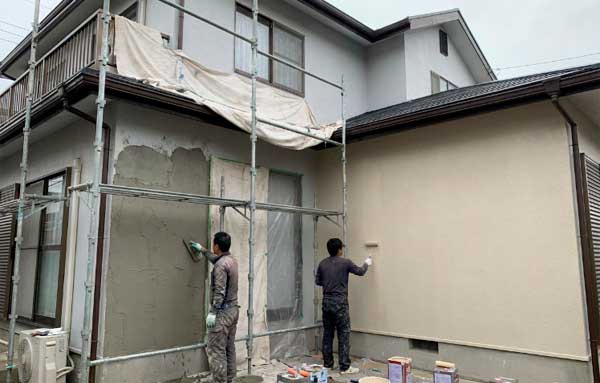
We never just smear caulk over a crack. Our technicians use specialized tools to “V-groove” or trench out the existing cracks, opening them up to create a proper channel. We then fill these channels with premium, masonry-compatible elastomeric patching compounds that flex with the house.
2. pH Testing and Masonry Primer
Freshly repaired stucco has a highly alkaline pH level that will burn right through standard paint. We ensure the repairs are properly cured and apply an alkali-resistant masonry primer to seal the entire wall and ensure perfect adhesion.
3. The Elastomeric Shield
Instead of using standard acrylic paint, we apply high-build Elastomeric Coatings. Elastomeric paint is applied much thicker than standard paint and cures into a tough, rubber-like membrane. When your home shifts in the heat and a new hairline crack tries to form in the stucco, the elastomeric coating literally stretches to bridge the gap, keeping the waterproof seal completely intact.
Secure Your Home’s First Line of Defense
Don’t wait until you see water stains on your interior drywall to take action. Proactive stucco maintenance and professional waterproofing will save you thousands of dollars in structural repairs and keep your home looking immaculate.
Have you noticed cracks forming on your exterior walls? Contact the experts at BC Painting today for a free stucco inspection and waterproofing estimate.